

https://online.moneyshow.com/2023/october/accredited-virtual-expo/speakers/565spk/mark-leibovit/?scode=061218

U.S. MARKETS:
Stocks fluctuated over the course of the trading session on Wednesday but managed to end the day mostly higher. With the upward move, the major averages all closed higher for the fourth consecutive session.
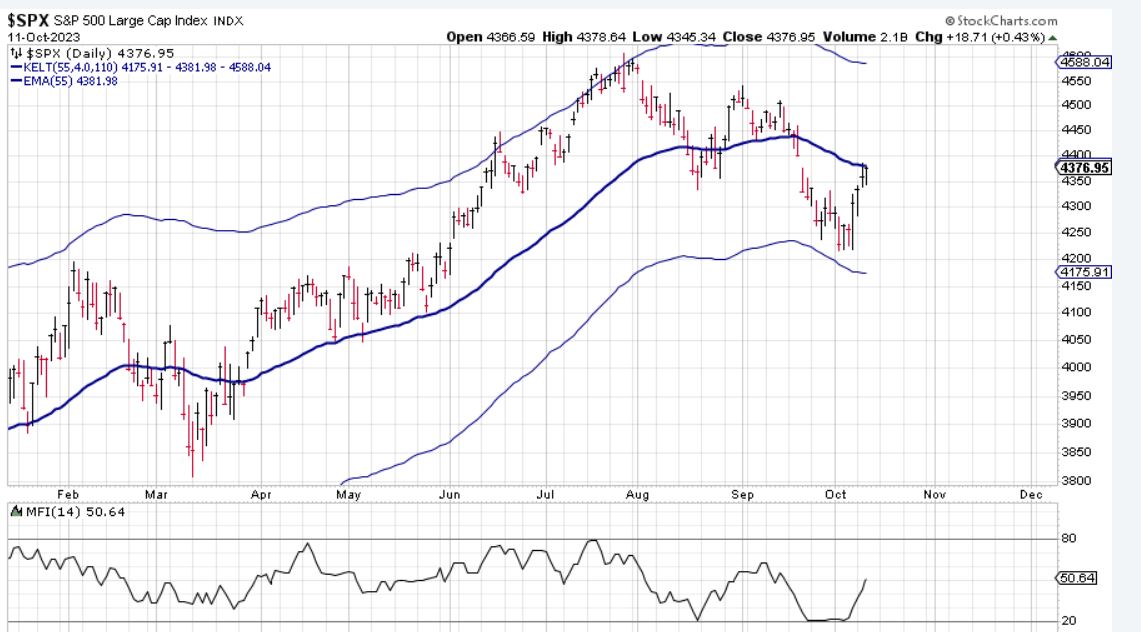
The major averages moved to the upside going into the close, ending the session near their best levels of the day. The Nasdaq advanced 96.83 points or 0.7 percent to 13,659.68, the S&P 500 climbed 18.71 points or 0.4 percent to 4,376.95 and the Dow rose 65.57 points or 0.2 percent to 33,804.87.
The higher close on Wall Street came amid a continued decline by treasury yields, with yields pulling back further off their highest levels in over sixteen years.
Treasuries have recently benefited from their appeal as a safe haven amid the deadly conflict between Hamas and Israel.
Meanwhile, traders largely shrugged off a Labor Department report showing producer prices in the U.S. increased by slightly more than expected in the month of September.
The Labor Department said its producer price index for final demand climbed by 0.5 percent in September after advancing by 0.7 percent in August. Economists had expected prices to rise by 0.4 percent.
The producer price growth was partly due to a continued surge in energy prices, which spiked by 3.3 percent in September after skyrocketing by 10.3 percent in August.
The report also said the annual rate of producer price growth accelerated to 2.2 percent in September from a revised 2.0 percent in August.
Economists had expected the pace of price growth to come in unchanged compared to the 1.6 percent originally reported for the previous month.
“Officials are committed to reigning in inflation, but we expect prices to slow enough over the coming quarters to keep additional rate hikes off the table,” said Matthew Martin, U.S. Economist at Oxford Economics.
On Thursday, the Labor Department is scheduled to release its more closely watched report on consumer price inflation in the month of September.
The Federal Reserve also released the minutes of its latest monetary policy meeting on Wednesday, reiterating that a majority of participants expect one more interest rate hike will likely be appropriate.
The projections provided following the meeting forecast one more rate hike before the end of the year, although the minutes noted some officials judged it likely that no further increases would be warranted.
“All participants agreed that the Committee was in a position to proceed carefully and that policy decisions at every meeting would continue to be based on the totality of incoming information and its implications for the economic outlook as well as the balance of risks,” the Fed said.
At the same time, the minutes said all participants agreed that policy should remain restrictive for some time until the Fed is confident that inflation is moving down sustainably toward its 2 percent objective.
Sector News
Gold stocks turned in a strong performance on the day, resulting in a 2.3 percent jump by the NYSE Arca Gold Bugs Index.
The strength among gold stocks came amid an increase by the price of the precious metal, with gold for December delivery climbing $12 to $1,887.30 an ounce.
Interest rate-sensitive commercial real estate and housing stocks also saw considerable strength, driving the Dow Jones U.S. Real Estate Index and the Philadelphia Housing Sector Index up by 1.8 percent and 1.6 percent, respectively.
Pharmaceutical, computer hardware and utilities stocks also moved notably higher on the day, while networking stocks showed a significant move to the downside.
Other Markets
In overseas trading, stock markets across the Asia-Pacific region moved mostly higher during trading on Wednesday. Japan’s Nikkei 225 Index advanced by 0.6 percent, while Hong Kong’s Hang Seng Index jumped by 1.3 percent.
Meanwhile, the major European markets turned in a mixed performance on the day. While the German DAX Index rose by 0.2 percent, the U.K.’s FTSE 100 Index edged down by 0.1 percent and the French CAC 40 Index fell by 0.4 percent.
In the bond market, treasuries extended the significant rebound seen in the previous session. As a result, the yield on the benchmark ten-year note, which moves opposite of its price, slid 6.0 basis points to 4.595 percent.
Looking Ahead
Trading on Thursday is likely to be driven by reaction to the report on consumer price inflation, while the weekly jobless claims data may also attract some attention.
This Chart Should Have You Quaking with Fear -Daily Reckoning
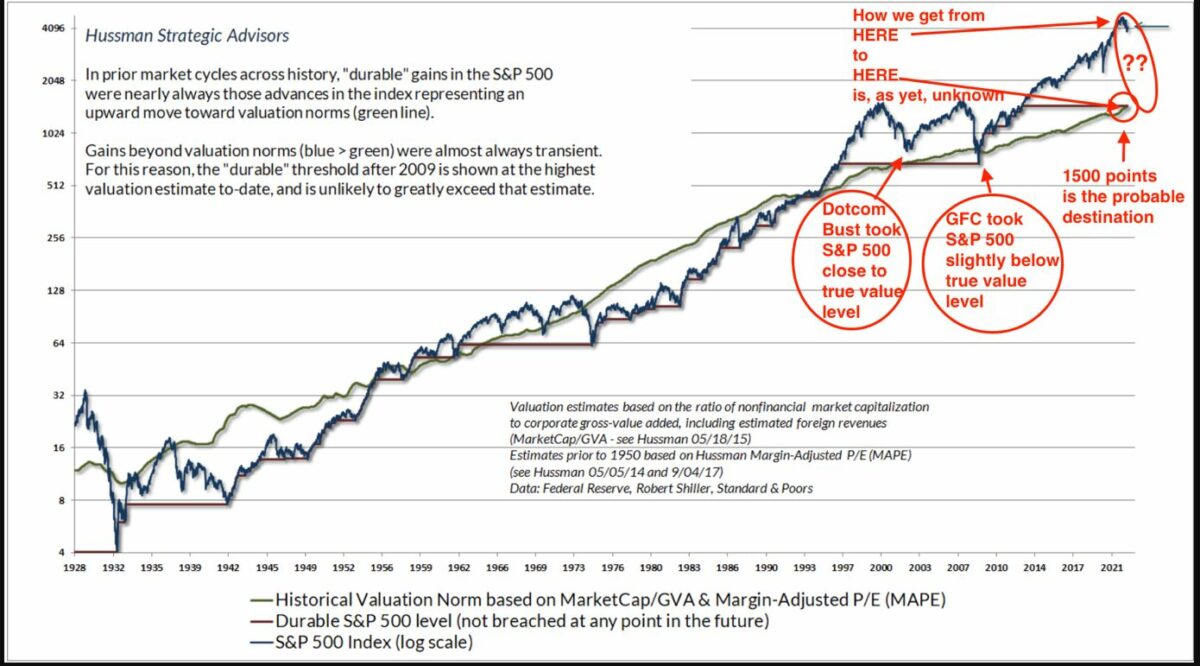
Everyone is familiar with the expression, “a picture is worth a thousand words”; the graph here depicts the bubbles we have waiting to pop in our markets today and can be summed up in one word … terrifying. This particular graph has been utilized since 1928 and has been one of the more consistent foretellers of market movement.
by Vern Gowdie
We have no control or influence over what the Fed or any central bank may or may not do.
We cannot control the level of incompetence exercised by elected officials.
The only thing we have power over are our own thoughts and actions.
Knowledge is the key to successfully navigating, what I anticipate, is going to be a very challenging period ahead.
What we think we know (based on a multitude of long-established valuation metrics) is the US share market peaked in late 2021, at what can be best described as…an extremely over-valued level.
Historically, over-valued and under-valued markets go through a time-honoured process of ‘mean reversion’…falling to lower levels or rising to higher levels.
John Hussman’s ‘Durable Gains’ chart – tracking the emotional ebb and flow of the S&P 500 (blue line) against the mathematically determined ‘True Value’ (green line) since 1928 – illustrates how, over the longer term, the S&P 500 ‘ducks and weaves’ its way around the level of ‘true value’.
When social mood is less than upbeat – Depression, The Second World War and the Inflationary 1970’s – the S&P 500 falls below its True Value…a signal to buy…one most people ignore.
Conversely, if people’s spirits are buoyed by a feeling of prosperity (the 1950s and 60s and 1995 onwards), the S&P 500 is pushed higher by a feel-good air of optimism…a signal to reduce exposure…again, one most people ignore.
SPX – HIT RESISTANCE ON TUESDAY JUST UNDER THE DOWNSIDE GAP.
https://tinyurl.com/2w6n7ept
US Fed, Economy, War on Cash, Cannabis, Market Manipulation

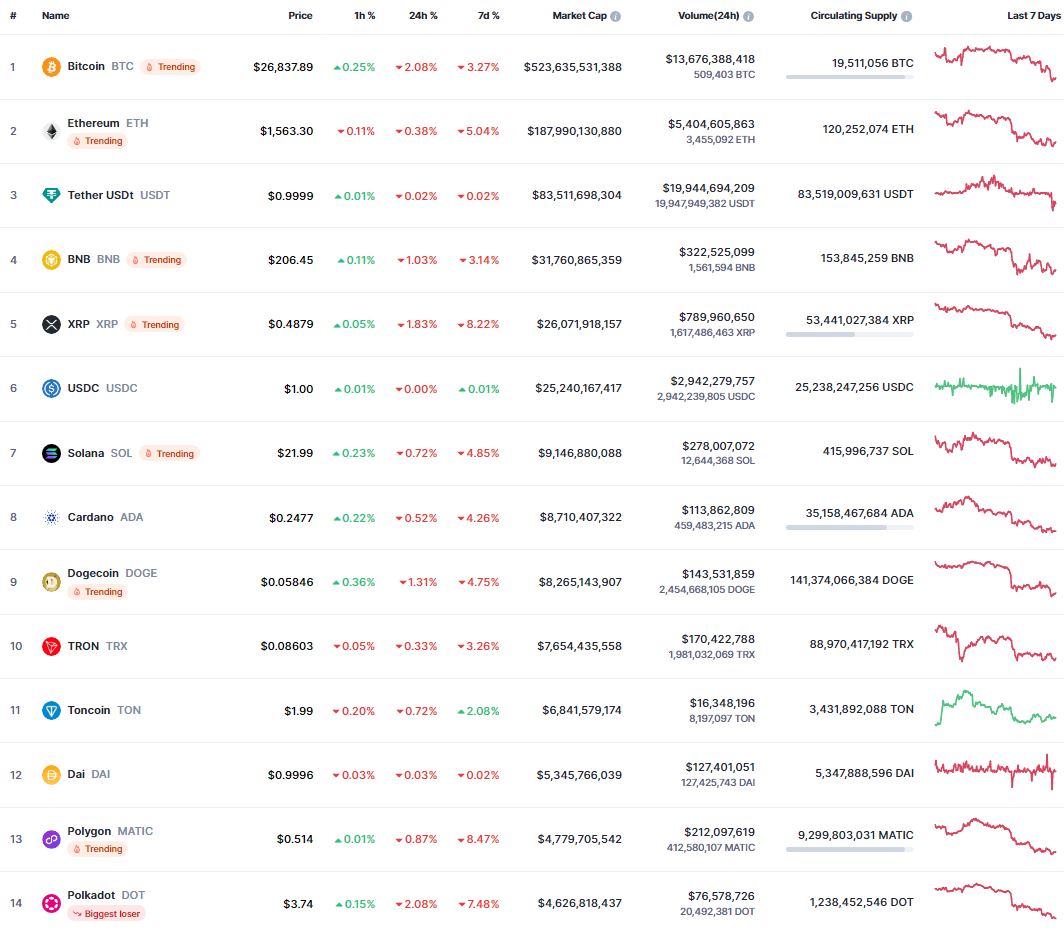
CRYPTO UPDATE AS OF OCTOBER 11, 2023:

Global central banks are hoarding gold like never before as they seek to reduce ‘overconcentration’ of dollar reserves -Business Insider

by Anil Varma
gold USAGlobal central banks have been snapping up record amounts of gold since the start of 2022 – a trend that should continue as countries look to move away from an “overconcentration” of reserves in the dollar, according to State Street Global Advisors.
Monetary authorities across nations made net purchases of 387 metric tons of the yellow metal in the first half of 2023, after buying an unprecedented 1,083 tons the whole of last year, the world’s fourth-largest asset manager said in a recent note.
In addition to reserve diversification, the trend is also driven by central banks’ desire to strengthen balance sheets and increase liquidity without adding credit risk, according to the firm.
“The reasons driving central bank gold purchases – to diversify their reserves, improve their balance sheets, and gain liquidity from an asset without credit risk – likely won’t change given today’s increasing economic and geopolitical risks,” Maxwell Gold, head of gold strategy at State Street, wrote in the note.
“Therefore, as we look ahead, we expect central banks to continue their role as net purchasers of gold,” he added.
JPMorgan’s Marko Kolanovic braces for 20% market plunge, delivers recession warning -CNBC
by Stephanie Landsman
JPMorgan’s Marko Kolanovic is bracing for a 20% sell-off to hit the S&P 500.
According to the Institutional Investor hall-of-famer, high interest rates are creating a breaking point for stocks — and choosing cash at a 5.5% return in money market and short-term Treasuries are a key protection strategy right now.
“I’m not sure how we’re going to avoid it [recession] if we stay at this level of interest rates,” the firm’s chief market strategist and global research co-head told CNBC’s “Fast Money” on Thursday.
The S&P 500 closed at 4,258.19 on Thursday and is on the cusp of a five-week losing streak. The index is down more than 5% over the past month.
Kolanovic believes the weakness isn’t a strong sign a monster move lower is already here. He indicates a near-term bounce is still possible because a lot hinges on economicreports over the next few months.
“[We’re] not necessarily calling for an immediate sharp pullback,” he said. “Could there be another five, six, seven percent upside in equities? Of course… But there’s a downside. It could be 20% downside.”
10 U.S. Sectors To Be Affected If BRICS Stops Using the Dollar -Watcher.guru
by Vinod Dsouza
The BRICS summit ended on a high note in August after the bloc inducted six new countries into the group. Leading oil-producing nations Saudi Arabia, the UAE, Egypt, Iran, and Ethiopia will join the alliance in January 2024. Also, Argentina is the only new BRICS member that does not produce and export oil. The one common thing between the 11-member BRICS group is their disdain for the U.S. dollar. Moreover, BRICS is looking to end dependency on the U.S. dollar by promoting their local currencies for cross-border transactions.
In this article, we will highlight the 10 American sectors that could be severely affected if BRICS stops using the U.S. dollar for trade. The American economy could be significantly impacted if other local currencies grow stronger in the international markets.
A total of 10 financial sectors in the U.S. will be affected if BRICS uses local currencies and not the U.S. dollar. The sectors include banking, trade, forex, and tourism, among others. The U.S. financial sectors that could be affected if BRICS ditch the U.S. dollar are:
Global Financial System
Banking and Finance
Energy and Commodity Markets
International Trade and Investment
Capital Markets
Consumer Goods and Retail
Production and Consumption
Technology and Fintech
Government and Policy
Travel and Tourism
Moreover, all the 10 sectors are closely linked to the U.S. economy and could have complications if the dollar loses demand. The banking sector could take the first hit that might eventually spill over to the markets.
Something “Big and Stupid” Is Coming… -Daily Reckoning
Boy did the title of this article catch my eye. Sure could describe many of the scenarios we are facing today. In this case it’s tied to the coming debt crisis and reflects the harsh reality of where things are headed.
by James Rickards
With debt levels reaching all-time highs in major developed and developing economies, and with debt-to-GDP ratios also in record territory (not including contingent liabilities such as Social Security, health care and other entitlements, which make matters worse), it seems time to consider just how nations will deal with this problem.
The debt crisis may not be imminent, but it is unavoidable. When it happens, it may present the greatest financial disaster of all time. It’s never too soon for investors to consider the fallout.
When you issue debt in a currency you print, there’s no need for default in the sense of non-payment.
You can just have the central bank buy the debt (by printing money). This is the situation today in the U.S., Japan, the U.K. and the European Monetary Union (the countries that use the euro). They all have huge debt burdens, but they all have central banks that can simply buy the debt by printing money to avoid default.
Something is breaking in financial markets — Here’s what’s behind the sell-off -CNBC
Our economy and financial markets have been enjoying the benefits of historically low interest rates for quite awhile; but as markets absorb the hikes, that’s all about to change. This time it’s not limited to specific sectors of the market like we typically see in a downturn or sell-off, it’s everywhere.
by Jeff Cox
That cracking sound in financial markets isn’t the typical kind of break, where one asset class or another fractures and gives way. Instead, this is more a break in a narrative, one that has widespread repercussions.
The narrative in question is the one where the Federal Reserve holds interest rates low and everyone on Wall Street gets to enjoy the fruits.
That’s changing.
In its place comes a story in which rates are going to stay higher for longer, an idea Fed officials have tried to get the market to accept and which investors are only now beginning to absorb.
The pain of recognition was acute for Wall Street on Tuesday, with major averages down sharply across the board and Treasury yields surging to their highest levels in some 16 years.
“When you have an economy predicated on zero rates, this fast move [by the 10-year Treasury yield] towards 5%, the calculus has to change, because the ramifications are going to change,” said Quincy Krosby, chief global strategist at LPL Financial. “The cost of capital is going up, companies are going to have to refinance at a higher rate.”
The surge in rates is especially ominous as corporate America heads to third-quarter earnings reporting season, which is right around the corner.
“All of this has to be assimilated and digested by the market,” Krosby added. “You can see that it’s troubling and it’s difficult.”
No Privacy, No Property: The World In 2030 According To The WEF -ZeroHedge
The WEF. This may or may not be a familiar term to you, but it stands for the World Economic Forum. They’ve been trucking along for 50 years now and have rather quickly become known for “futuristic thinking & planning” when it comes to determining projections for societies, economies etc. The group consists of business and political leaders alike.
Their recent projections don’t bode well for our cherished liberties.
Authored by Madge Waggy via SevenWop.home.blog
The World Economic Forum (WEF) was founded fifty years ago. It has gained more and more prominence over the decades and has become one of the leading platforms of futuristic thinking and planning. As a meeting place of the global elite, the WEF brings together the leaders in business and politics along with a few selected intellectuals. The main thrust of the forum is global control.
Free markets and individual choice do not stand as the top values, but state interventionism and collectivism. Individual liberty and private property are to disappear from this planet by 2030 according to the projections and scenarios coming from the World Economic Forum.
Individual liberty is at risk again. What may lie ahead was projected in November 2016 when the WEF published “8 Predictions for the World in 2030.” According to the WEF’s scenario, the world will become quite a different place from now because how people work and live will undergo a profound change. The scenario for the world in 2030 is more than just a forecast. It is a plan whose implementation has accelerated drastically since with the announcement of a pandemic and the consequent lockdowns.
According to the projections of the WEF’s “Global Future Councils,” private property and privacy will be abolished during the next decade. The coming expropriation would go further than even the communist demand to abolish the property of production goods but leave space for private possessions. The WEF projection says that consumer goods, too,
would be no longer private property.
If the WEF projection should come true, people would have to rent and borrow their necessities from the state, which would be the sole proprietor of all goods. The supply of goods would be rationed in line with a social credit points system. Shopping in the traditional sense would disappear along with the private purchases of goods. Every personal move would be tracked electronically, and all production would be subject to the requirements of clean energy and a sustainable environment.
What happens if the government shuts down: An illustrated guide-CNN
With Congress barreling toward a government shutdown, many Americans are wondering how it could affect them. Here’s a guide to what you can expect.
What is a government shutdown?
A government shutdown happens when Congress doesn’t approve funding for the federal government by the time the new fiscal year starts on October 1. Each year, Congress must pass the 12 appropriation bills that make up the discretionary spending budget and set funding levels for federal agencies.
What happens during a government shutdown?
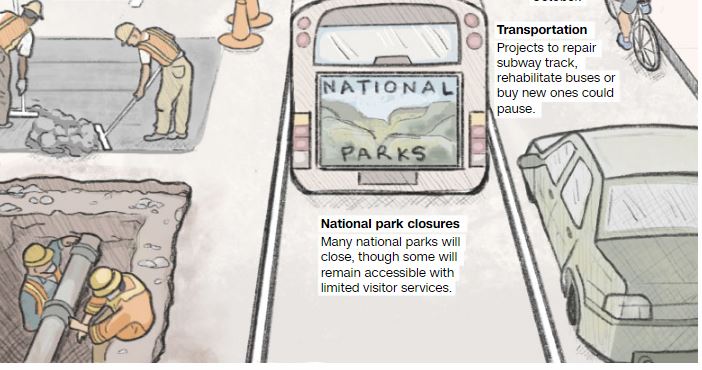
If lawmakers fail to enact all or some of the appropriation bills, many government operations grind to a halt, resulting in a full or partial government shutdown until Congress acts. However, government functions that are deemed essential will continue.
Each federal agency comes up with a contingency plan that outlines which of its functions will continue during a shutdown and which will stop, as well as how many of its employees will continue working and how many will be furloughed until the shutdown ends.
What it means for you
Because many federal workers are off the job during a government shutdown, many services are stopped or slowed, disturbing the day-to-day life for many Americans.
Notably, Social Security payments to seniors, Americans with disabilities and others would continue to be distributed. The Postal Service will also continue regular service.
Here are some examples of how a shutdown could affect you.

JPMorgan CEO Jamie Dimon Says This Is the Number One Risk Threatening Global Economy – And It’s Not Inflation – The Daily Hodl

Jamie Dimon is comparing the current American market sentiment to a sugar high and is concerned many are unprepared for what is on the horizon. He advises investors to batten down the hatches and prepare for some hardship ahead.
by Henry Kanapi
JPMorgan chief executive Jamie Dimon says that the global economy is facing a far greater risk than persistent inflation or high interest rates.
In a new interview on CNBC India, Dimon says that people should prepare for higher oil and gas prices as well as higher interest rates.
While Dimon is urging people and businesses to be ready for higher energy costs along with tight monetary policies, he highlights that his number one concern is the current geopolitical situation.
According to Dimon, the war in Ukraine is negatively impacting oil, gas and food prices. He also notes that it is “affecting all global relationships.”
“I think the geopolitical situation is the thing that most concerns me, and we don’t know the effect of that on the economy. Again, I think the humanitarian part – that’s far more important.
I think it’s very important for the future of the free democratic world. We may be at an inflection point for the free democratic world. That’s how seriously I take it…
We have dealt with inflation before, we have dealt with deficits before [and] we have dealt with recessions before. We haven’t really seen something like this pretty much since World War II … There is no playbook.”
The SEC is Snooping on All Your Trades
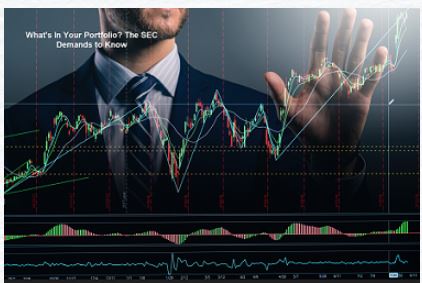
EDITOR’S NOTE: The War on Cash is fought on a variety of fronts but the end result is always a loss of liberty and privacy for us all. The SEC’s sharing of the data on every market move we make is just the latest strategy. While the tracking should be alarming in and of itself, the threat of this information being open to hacking is of even greater concern. A centralized database to track every American investor is, without question, an unconstitutional data grab; but can it be stopped?
What’s in Your Portfolio? The SEC is Snooping on All Your Trades -MishTalk.com
portfolioThe SEC is now tracking your stock trades by your Social Security Number. It shares the data with 3,000 outside agencies.
In 2012 the SEC approved a new rule requiring a Consolidated Audit Trail to Monitor and Analyze Trading Activity.
“A consolidated audit trail that accurately tracks orders throughout their lifecycle and identifies the broker-dealers handling them will provide us with an unprecedented ability to effectively oversee the markets we regulate,” said SEC Chairman Mary Schapiro.
The new rule becomes effective 60 days after its publication in the Federal Register. SROs are required to submit the NMS plan to the Commission within 270 days of the rule’s publication in the Federal Register. Once the Commission approves the NMS plan, the SROs are required to report the required data to the central repository within one year, and members of the SROs are required to report within two years. Certain small broker-dealers will have up to three years to report the data.
This ruling was in response to a 2010 flash crash and quietly sat for years. The SEC is now following through.
The scope of the Consolidated Audit Trail, or CAT, a regulation the SEC issued in 2016 but implemented only recently, is breathtaking and unprecedented. In the words of the SEC press release, the regulation instructs regulated financial institutions to identify “every order, cancellation, modification and trade execution for all exchange-listed equities and options across all U.S. markets.”
What about the January Barometer?

The January Barometer calls for a positive year-end outcome, but a lot can happen between now and then. Please check with previous editions discussing the calculation of the Barometer.


https://tinyurl.com/2rd9wv52
OPPORTUNITY TO ACCESS MARK LEIBOVIT’S PROPRIETARY VOLUME REVERSAL INDICATOR – THIS IS THE ONLY PLACE TO DO IT!
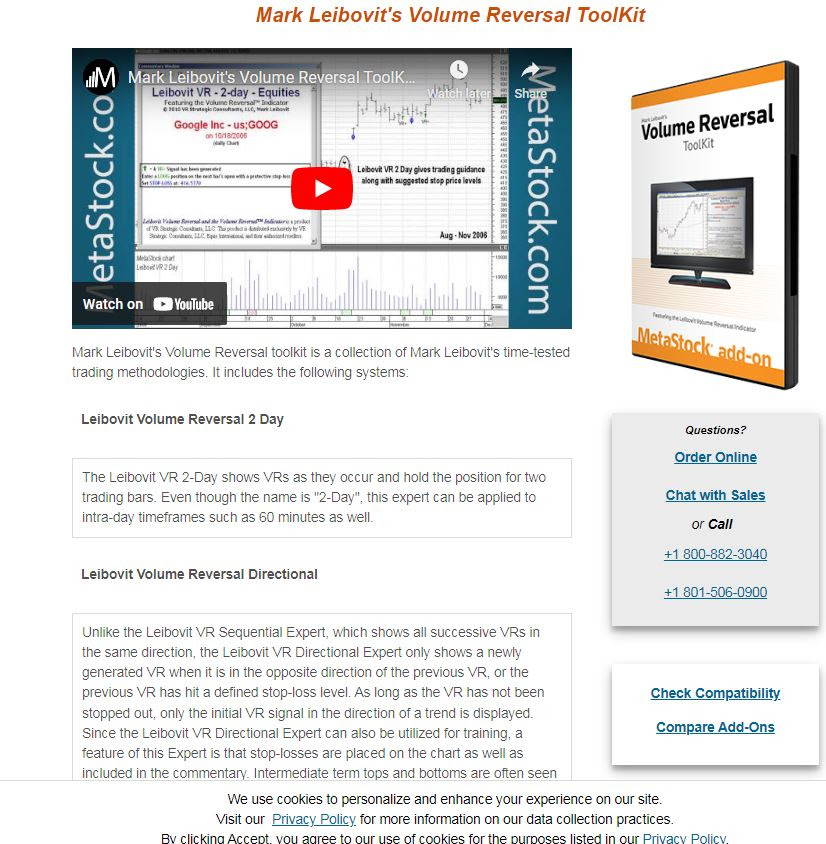
https://www.metastock.com/
COME ON, DAD. IT’S TIME TO EAT

DISCLAIMER:
WE ARE NOT FINANCIAL ADVISORS AND DO NOT PROVIDE FINANCIAL ADVICE
The website, LeibovitVRNewsletters.com, is published by LeibovitVRNewsletters LLC.
In using LeibovitVRnewsletters.com (a/k/a LeibovitVRNewsletters LLC) you agree to these Terms & Conditions governing the use of the service. These Terms & Conditions are subject to change without notice. We are publishers and are not registered as a broker-dealer or investment adviser either with the U.S. Securities and Exchange Commission or with any state securities authority.
All stocks and ETFs discussed are HYPOTHETICAL and not actual trades whose actual execution may differ markedly from prices posted on the website and in emails. This may be due internet connectivity, quote delays, data entry errors and other market conditions. Hypothetical or simulated performance results have certain inherent limitations as to liquidity and execution among other variables. PAST RESULTS ARE NOT NECESSARILY INDICATIVE OF FUTURE FORECASTING ACCURACY OR PROFITABLE TRADING RESULTS.
All investments are subject to risk, which should be considered on an individual basis before making any investment decision. We are not responsible for errors and omissions. These publications are intended solely for information and educational purposes only and the content within is not to be construed, under any circumstances, as an offer to buy or to sell or a solicitation to buy or sell or trade in any commodities or securities named within.
All commentary is provided for educational purposes only. This material is based upon information we consider reliable. However, accuracy is not guaranteed. Subscribers should always do their own investigation before investing in any security. Furthermore, you cannot be assured that your will profit or that any losses can or will be limited. It is important to know that no guarantee of any kind is implied nor possible where projections of future conditions in the markets are attempted.
Stocks and ETFs may be held by principals of LeibovitVRNewsletters LLC whose personal investment decisions including entry and exit points may differ from guidelines posted.
LeibovitVRNewsletters.com cannot and do not assess, verify or guarantee the suitability or profitability of any particular investment. You bear responsibility for your own investment research and decisions and should seek the advice of a qualified securities professional before making any investment. As an express condition of using this service and anytime after ending the service, you agree not to hold LeibovitVRNewsletters.com or any employees liable for trading losses, lost profits or other damages resulting from your use of information on the Site in any form (Web-based, email-based, or downloadable software), and you agree to indemnify and hold LeibovitVRNewsletters.com and its employees harmless from and against any and all claims, losses, liabilities, costs, and expenses (including but not limited to attorneys’ fees) arising from your violation of this agreement. This paragraph is not intended to limit rights available to you or to us that may be available under the federal securities laws.
For rights, permissions, subscription and customer service, contact the publisher at mark.vrtrader@gmail.com or call at 928-282-1275 or mail to 10632 N. Scottsdale Road B-426, Scottsdale, AZ 85254.
The Leibovit Volume Reversal, Volume Reversal and Leibovit VR are registered trademarks.
© Copyright 2023. All rights reserved.

