

https://talkdigitalnetwork.substack.com/p/mark-leibovit-is-it-that-time-of

Japan moves into Monday morning, September 7, there are several negative developments worth watching, but I am not seeing evidence of a major destructive earthquake or tsunami tonight.
-
Severe rain/flooding: Heavy rain is hitting Tokyo and the broader Kanto region. A Level 5 emergency landslide warning—Japan’s highest alert level—was issued for Niijima Island, south of Tokyo. There are also warnings involving Chiba and other areas, with flooding, rising rivers, landslide danger, school closures and some train cancellations.
-
Earthquake activity: JMA recorded an offshore M4.6 east of Hachijōjima at 9:17 p.m. Sunday, followed by an M4.4 northeast of Amami Ōshima at 12:40 a.m. Monday. The latter apparently produced no observed intensity of 1 or greater. There was also an M4.7 east of Aomori earlier Sunday.
-
No major tsunami signal: The latest earthquake information I’ve checked does not indicate a major tsunami threat associated with tonight’s Japanese earthquakes. A small M2.4 quake in northern Ibaraki at 2:04 a.m. Monday was specifically reported as posing no tsunami concern.
-
Financial stress is more significant than it may initially appear: Japan just reported that its foreign-exchange reserves suffered their largest monthly decline ever—$79.6 billion in August, after extraordinary intervention to support the yen. Japan spent about ¥15.4 trillion ($98.7 billion) intervening in currency markets.
-
BOJ tightening risk: Markets are now nearly fully pricing a 25-basis-point Bank of Japan rate increase at the September 17–18 meeting, which could matter considerably for the yen, Japanese bonds, carry trades and eventually U.S. markets.
Interestingly, despite those negatives, the Nikkei is currently up about 2.2%, so Japanese equities aren’t signaling panic. Rising oil prices are another problem for Japan, however, because Japan is a major energy importer and higher oil adds to its inflation pressures.
What I would watch especially closely tonight
The combination that catches my attention is heavy rain + multiple offshore earthquakes + rising Japanese bond yields + enormous yen intervention + an approaching BOJ rate hike. These are separate phenomena, so I would not connect them causally, but together they make Japan unusually important to Monday’s global risk picture.
Russian gold floods through Hong Kong following Western sanctions
By William Sandlund and Haohsiang Ko
Financial Times, London
Sunday, September 6, 2026
Russian gold shipments to Hong Kong have surged this year as the Chinese territory becomes a top trading centre for bullion placed under sanctions by the West.
The shift comes at a time when Asian hubs are vying to control more of the global gold trade that has traditionally centred on London, New York, and Dubai.
Hong Kong trade data shows that almost 100 tonnes of gold were imported from Russia during the first seven months of this year, a record level and nearly three times the amount imported during the same period in 2025.
“Since London closed its doors to Russian gold following the outbreak of the Ukraine conflict, Russian producers have increasingly redirected exports to Eastern markets,” said Debajit Saha, analyst at the London Stock Exchange Group. …
China is the largest producer and consumer of gold, and Hong Kong has been positioning itself as a key bullion trading hub. The city began piloting a new gold clearing system in July.
Hong Kong’s role in facilitating Russian gold flows into China is a “consequence of the Russia-China economic relationship,” whereby Moscow sells resources to Beijing in exchange for economic support, said Vita Spivak, a consultant at UK-based geopolitical advisory firm Gatehouse.
FOCUSING ON REFORMING THE COMEX NOW THAT CHINA HAS RESTRICTED PAPER TRADING IN GOLD
REFORM COMEX — END PAPER-METALS PRICE DISTORTION
The central proposition could be:
Gold and silver prices should be determined by transparent, competitive markets that cannot be distorted by excessive leverage, concentrated positions, spoofing, or trading disconnected from physical supply and demand.
That lets us demand reform first and closure or restructuring if the exchange cannot demonstrate a fair price-discovery process.
There is a real regulatory pathway. The CFTC regulates U.S. futures markets, and federal position limits specifically apply to COMEX gold and silver. The CFTC also accepts enforcement complaints and whistleblower submissions concerning suspected Commodity Exchange Act violations. CME itself accepts complaints concerning potential exchange-rule violations.
How I would build the movement
1. Start with an evidence dossier—not accusations.
We assemble a serious report examining COMEX gold and silver: futures open interest versus deliverable inventories; concentration among major traders; physical delivery versus contracts outstanding; position-limit exemptions; exchange-for-physical activity; unusual price/volume episodes; margin changes during major moves; documented spoofing/manipulation enforcement cases; and the relationship between COMEX futures prices and physical-market pricing.
This is important because we should distinguish provable market-structure problems from claims of manipulation that the evidence doesn’t establish.
2. Make several specific demands rather than one impossible-to-measure demand.
For example: dramatically greater disclosure of concentrated positions and exemptions; publication of better physical-delivery and warehouse data; stricter enforcement against spoofing/manipulative trading; an independent review of whether COMEX gold and silver futures provide reliable price discovery; and consideration of substantially higher physical-delivery requirements or other structural changes.
If that investigation demonstrates that COMEX cannot provide fair and orderly price discovery, then the campaign can argue for suspension/revocation/restructuring rather than beginning with the conclusion.
3. Petition the CFTC and Congress.
The CFTC provides formal mechanisms for public comments, complaints and regulatory submissions. We could prepare a professional submission requesting a regulatory investigation rather than sending thousands of generic complaints.
4. Build a coalition.
Your background could actually be useful here. Instead of presenting this as another internet “gold manipulation” campaign, position it as a market-integrity initiative led by traders, analysts, mining investors, precious-metals dealers and physical-metal owners.
Possible allies would include mining executives, gold/silver newsletter publishers, bullion dealers, economists, former futures traders and members of Congress interested in commodity-market oversight.
5. Give it a memorable identity.
I’d consider something like “Free Gold & Silver,” “Fair Metals Markets,” or “Restore Honest Price Discovery.” I prefer the last concept to “Close COMEX” because it tells the public what we’re for, not merely what we’re against.
And there is an especially interesting angle for you
You have decades of market experience and an existing newsletter/media audience. Instead of merely signing somebody else’s petition, you could publish the initial “COMEX Gold & Silver Price Discovery Report.”
The opening challenge could be very simple:
If COMEX is providing legitimate price discovery for gold and silver, demonstrate it transparently. If it cannot, reform the system.
That puts the burden on evidence rather than conspiracy claims.
I think our first move should be the research paper, not the petition. We can build a documented case covering COMEX structure, paper-to-physical relationships, warehouse/delivery mechanics, concentration, position limits, historical manipulation/spoofing cases, and exactly what authority the CFTC has to intervene. The COMEX rulebook itself gives us the starting point—Gold is Chapter 113 and Silver Chapter 112.
The strongest case is not that every COMEX price move is manipulated; it is that documented manipulation has occurred in precious-metals futures, while the structure of the market deserves much greater scrutiny.
The evidence base already includes something substantial: in 2020 the CFTC ordered JPMorgan to pay $920.2 million over manipulation and spoofing involving precious-metals and Treasury futures. The CFTC found hundreds of thousands of spoof orders over at least eight years and said the conduct harmed other market participants. The Justice Department subsequently obtained convictions involving precious-metals traders and described deceptive orders designed to create false impressions of supply and demand in COMEX markets.
THE CASE FOR REFORMING OR CLOSING COMEX
Preliminary Working Paper — September 2026
Proposed mission statement
Gold and silver are monetary and strategic assets whose prices affect investors, miners, businesses, governments and savers throughout the world.
We call for a comprehensive, independent examination of the COMEX gold and silver markets to determine whether their present structure provides fair, transparent and competitive price discovery.
Our objective is not to predetermine the outcome of that investigation.
Our objective is to establish the facts.
Where manipulation, excessive concentration, inadequate transparency, conflicts of interest or structural weaknesses are identified, we call for meaningful reform.
If the existing COMEX structure cannot provide demonstrably fair and transparent price discovery, regulators and Congress should consider fundamental restructuring, suspension of affected contracts, or other remedies permitted by law.
The price of physical gold and silver should reflect legitimate supply and demand—not deceptive trading practices or artificial market signals.
The first major piece of evidence
This shouldn’t begin with theories. It should begin with proven cases.
The CFTC’s JPMorgan case is extraordinary. According to the regulator, JPMorgan traders placed hundreds of thousands of orders involving gold, silver, platinum and palladium futures that they intended to cancel. The purpose was to send false supply/demand signals, and the CFTC concluded that in numerous instances traders intended to manipulate prices and actually caused artificial prices.
DOJ’s criminal cases provide additional evidence. Prosecutors described thousands of deceptive trading sequences involving precious-metals futures on COMEX/NYMEX and obtained convictions against traders from several Wall Street institutions.
That’s far stronger material for our campaign than saying, “We think somebody is suppressing gold.”
We can say:
Manipulation of precious-metals futures isn’t merely an allegation. U.S. regulators and federal prosecutors have established specific instances of it. The unanswered question is whether existing market structure and oversight adequately protect price discovery.
That distinction will make the project much harder to dismiss.
The second investigation: paper versus physical
This is where I want to dig much deeper.
COMEX gold futures are governed under Chapter 113 and silver under Chapter 112 of the COMEX rulebook.
We should construct a historical database showing, for both gold and silver:
futures open interest → ounces represented → registered inventory → eligible inventory → actual deliveries → concentration → price movement.
But there’s an important caution: simply dividing total futures open interest by registered inventory and calling the result a “paper-to-gold ratio” does not by itself prove manipulation. Most futures contracts are closed or rolled rather than delivered.
Instead, we’ll investigate whether the relationship becomes problematic during periods of market stress or unusually concentrated positioning.
The third issue may be particularly important: position limits
The CFTC currently lists COMEX Gold and Silver among the metals subject to federal speculative position limits. The published spot-month limits are 6,000 gold contracts and 3,000 silver contracts.
But the regulatory framework also contains bona-fide hedge exemptions.
That gives us a concrete question:
Who receives exemptions, how large can exempt positions become, and does the public receive enough information to determine whether concentrated positions can distort price discovery?
COMEX made a 2026 filing concerning Rules 559, 560 and 562 covering position limits, exemptions, position accountability and violations, so this remains a live regulatory subject.
Our five questions for the CFTC
I think these should eventually become the backbone of a petition and congressional letter:
Can the CFTC demonstrate that COMEX gold and silver futures consistently produce prices reflecting legitimate competitive supply and demand?
How concentrated are the largest long and short positions when all commonly controlled accounts and applicable instruments are aggregated?
How much additional market concentration results from bona-fide hedge exemptions and other exemptions from position limits?
Following the documented JPMorgan and other precious-metals spoofing cases, what structural safeguards were implemented—and how can the public measure whether they are working?
Would greater transparency regarding large positions, exemptions, warehouse inventories and physical delivery materially improve public confidence in gold and silver price discovery?
Those questions are difficult to dismiss as conspiracy theories because they are fundamentally requests for data and transparency.
One thing I would change about the campaign name
Rather than call the organization “Close COMEX,” I’d use:
RESTORE HONEST PRICE DISCOVERY
The COMEX Gold & Silver Market Reform Initiative
Then “Reform It—or Close It” can be the harder-edged slogan.
That preserves credibility with journalists, regulators, mining executives and members of Congress while leaving closure squarely on the table.
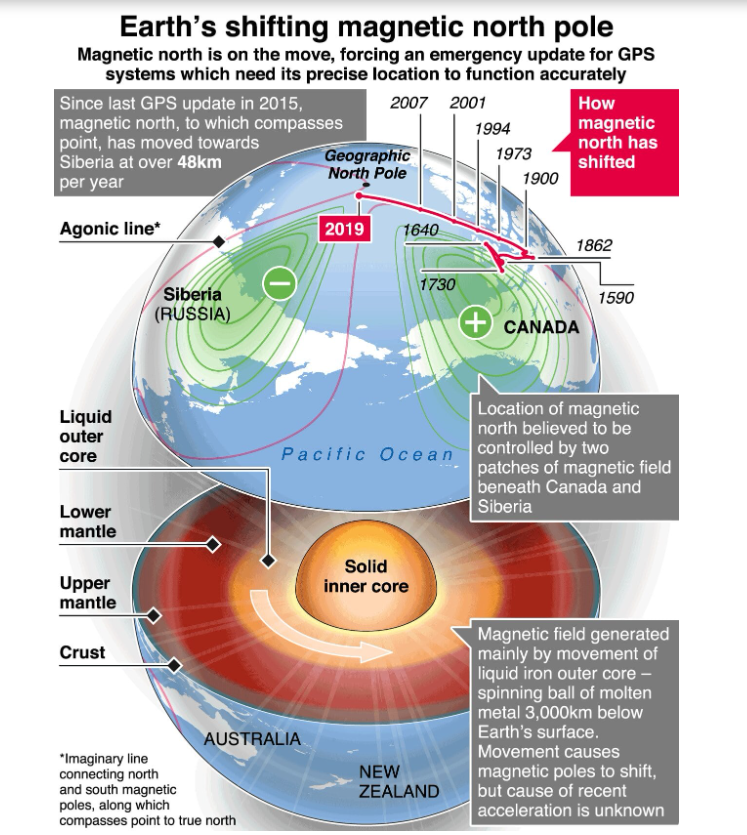


https://www.pbs.org/video/deadly-floods-1787778421/?utm_source=chatgpt.com
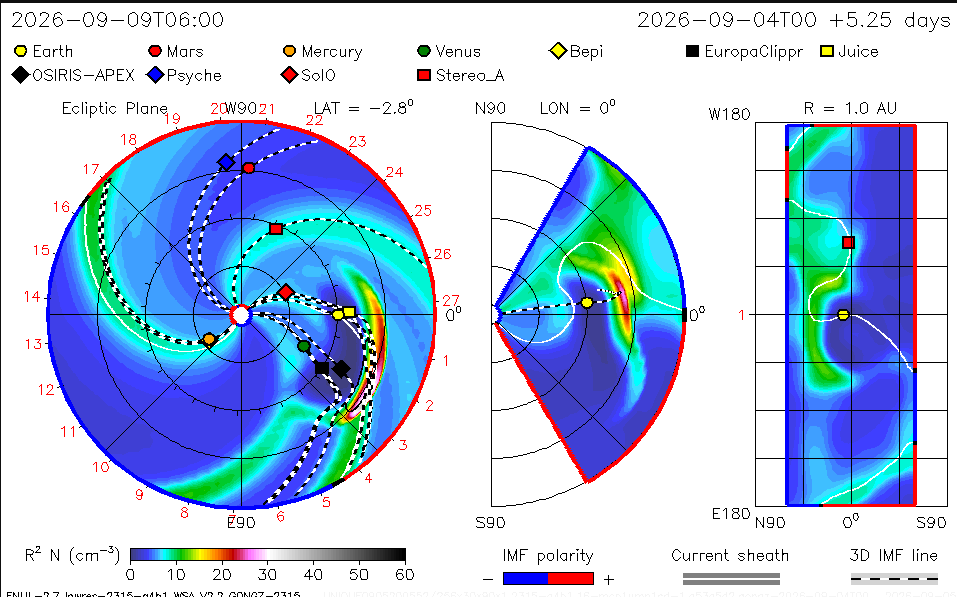
OUR GREATEST PLANETARY FEAR IS THE SUN!




ORDER LINK:
https://tinyurl.com/3tjv5up6\
I AM AVAILABLE FOR TECHNICAL CONSULTATION ON THE VOLUME REVERSAL (TM) STRATEGY AND ACCOMPANYING TECHNICAL ANALYSIS. PLEASE EMAIL MARK.VRTRADER@GMAIL.COM
One interesting piece of Wall Street Week history is that my profile places me among a relatively small group of market technicians who achieved long-term national visibility through the show,Wall Street Week with Louis Rukeyser.
Seven years as a Wall Street Week Elf
More than thirty years as a Market Monitor guest on PBS’s Nightly Business Report
Two-time Timer Digest #1 market-timing recognition twice
Creator of the trademarked Volume Reversal Indicator.
MY 2011 BOOK:

MY 2027 BOOK IN THE WORKS:


DISCLAIMER
WE ARE NOT FINANCIAL ADVISORS AND DO NOT PROVIDE FINANCIAL ADVICE
The website, LeibovitVRNewsletters.com, is published by LeibovitVRNewsletters LLC.
In using LeibovitVRnewsletters.com (a/k/a LeibovitVRNewsletters LLC) you agree to these Terms & Conditions governing the use of the service. These Terms & Conditions are subject to change without notice. We are publishers and are not registered as a broker-dealer or investment adviser either with the U.S. Securities and Exchange Commission or with any state securities authority.
All stocks and ETFs discussed are HYPOTHETICAL and not actual trades whose actual execution may differ markedly from prices posted on the website and in emails. This may be due internet connectivity, quote delays, data entry errors and other market conditions. Hypothetical or simulated performance results have certain inherent limitations as to liquidity and execution among other variables. PAST RESULTS ARE NOT NECESSARILY INDICATIVE OF FUTURE FORECASTING ACCURACY OR PROFITABLE TRADING RESULTS.
All investments are subject to risk, which should be considered on an individual basis before making any investment decision. We are not responsible for errors and omissions. These publications are intended solely for information and educational purposes only and the content within is not to be construed, under any circumstances, as an offer to buy or to sell or a solicitation to buy or sell or trade in any commodities or securities named within.
All commentary is provided for educational purposes only. This material is based upon information we consider reliable. However, accuracy is not guaranteed. Subscribers should always do their own investigation before investing in any security. Furthermore, you cannot be assured that your will profit or that any losses can or will be limited. It is important to know that no guarantee of any kind is implied nor possible where projections of future conditions in the markets are attempted.
Stocks and ETFs may be held by principals of LeibovitVRNewsletters LLC whose personal investment decisions including entry and exit points may differ from guidelines posted.
LeibovitVRNewsletters.com cannot and do not assess, verify or guarantee the suitability or profitability of any particular investment. You bear responsibility for your own investment research and decisions and should seek the advice of a qualified securities professional before making any investment. As an express condition of using this service and anytime after ending the service, you agree not to hold LeibovitVRNewsletters.com or any employees liable for trading losses, lost profits or other damages resulting from your use of information on the Site in any form (Web-based, email-based, or downloadable software), and you agree to indemnify and hold LeibovitVRNewsletters.com and its employees harmless from and against any and all claims, losses, liabilities, costs, and expenses (including but not limited to attorneys’ fees) arising from your violation of this agreement. This paragraph is not intended to limit rights available to you or to us that may be available under the federal securities laws.
For rights, permissions, subscription and customer service, contact the publisher at mark.vrtrader@gmail.com or call at 928-282-1275 or mail to 10632 N. Scottsdale Road B-426, Scottsdale, AZ 85254.
The Leibovit Volume Reversal, Volume Reversal and Leibovit VR are registered trademarks.
© Copyright 2026. All rights reserved.

