

PODCAST RECORDED THURSDAY AFTERNOON JULY 3, 2025 – TITLED: LOWER OIL PRICES GOOD FOR STOCK MARKET
https://www.howestreet.com/2025/07/lower-oil-prices-good-for-stock-market-mark-leibovit/
NEXT PODCAST OVER THE WEEKEND ASA GUEST ON ‘THIS WEEK IN MONEY’ – HOWE STREET RADIO

GREAT VIDEO ON ON DONALD TRUMP’S LIFE EVOLUTION:
https://tinyurl.com/mta7xa4v


U.S. Stocks Close Firmly Positive After Yesterday’s Lackluster Session
After ending Tuesday’s choppy trading session little changed, stocks moved mostly higher over the course of the trading session on Wednesday.
The major averages gave back ground after an early advance but moved back to the upside as the day progressed, closing firmly in positive territory.
The tech-heavy Nasdaq jumped 192.87 points or 0.9 percent to a new record closing high of 20,611.34, the S&P 500 climbed 37.74 points or 0.6 percent to 6,263.26 and the Dow rose 217.54 points or 0.5 percent to 44,458.30.
The strength on Wall Street may partly have reflected optimism about a potential trade between the U.S. and the European Union.
A report from the Financial Times indicated EU negotiators are closing in on a trade deal with the U.S. that would cement higher tariffs than those granted to the U.K.
Nvidia (NVDA) helped lead the markets higher, with the AI darling jumping by 1.8 percent and briefly becoming the first company to reach a market capitalization of $4 trillion
Traders also kept an eye on the latest developments on the trade front, with President Donald Trump posting several more letters to world leaders on Truth Social revealing plans to increase tariffs.
Trump posted letters sent to the leaders of the Philippines, Brunei, Moldova, Algeria, Iraq, Libya and Sri Lanka after posting letters sent to the leaders of 14 other leaders earlier in the week.
Meanwhile, the Federal Reserve released the minutes of its June monetary policy meeting, which revealed most participants generally agree the central bank is well positioned to wait for more clarity on the outlook for inflation and the economy before adjusting interest rates.
The Fed’s “wait and see” approach comes as participants said economic growth and the labor market remain solid and described monetary policy as moderately or modestly restrictive.
Sector News
Housing stocks turned in some of the market’s best performances on the day, with the Philadelphia Housing Sector Index surging by 2.9 percent to its best closing level in over four months.
Significant strength was also visible among gold stocks, as reflected by the 1.9 percent gain posted by the NYSE Arca Gold Bugs Index.
Biotechnology and utilities stocks also saw notable strength, while oil service stocks gave back ground after Tuesday’s surge, dragging the Philadelphia Oil Service Index down by 1.1 percent.
Other Markets
In overseas trading, stock markets across the Asia-Pacific region turned in a mixed performance on Wednesday. Japan’s Nikkei 225 Index rose by 0.3 percent, while China’s Shanghai Composite Index edged down by 0.1 percent and Hong Kong’s Hang Seng Index slumped by 1.1 percent.
Meanwhile, the major European markets all moved to the upside on the day. While the U.K.’s FTSE 100 Index crept up by 0.2 percent, the German DAX Index and the French CAC 40 Index both jumped by 1.4 percent.
In the bond market, treasuries saw a notable rebound after trending lower over the past several sessions. As a result, the yield on the benchmark ten-year note, which moves opposite of its price, slumped 7.3 basis points to 4.342 percent.
Looking Ahead
Trading on Thursday may be impacted by reaction to the Labor Department’s report on initial jobless claims in the week ended July 5th.
FROM BREITBART NEWS
The Fed’s Tariff Inflation Orthodoxy
If you were wondering how Federal Reserve officials view Donald Trump’s tariff plans, the latest Federal Open Market Committee (FOMC) minutes make one thing perfectly clear: they all think tariffs are inflationary. That view is not up for debate inside the Eccles Building. Every participant who spoke about tariffs at the June meeting assumed they would push prices higher, with no dissenters and no counterpoint.
The debate wasn’t over whether tariffs would raise prices, but how much, how fast, and how long the effect would last. Some officials suggested the impact might be modest or delayed—especially if businesses were still working through inventory purchased before tariffs hit. Others noted that smaller firms and narrow-margin sectors would have no choice but to pass costs on to consumers. Still others warned that even businesses not directly affected might use the tariff environment to raise prices on complementary products. Several raised concerns about inflation expectations becoming unanchored.
Left to right: Michelle Bowman, Jerome Powell, Lisa Cook, and Adriana Kugler attend the the Federal Reserve Board open meeting in Washington, DC, on June 25, 2025. (Al Drago/Bloomberg via Getty Images)
“Participants noted that increased tariffs were likely to put upward pressure on prices,” the minutes report without qualification.
This reflex wasn’t limited to policymakers. The Fed staff took the same view, projecting that tariffs would “raise inflation this year and provide a small boost in 2026.” But they actually revised their inflation outlook downward in June and upgraded their growth forecast. Why? Because they assumed effective tariff rates would remain lower than in April, due to the 90-day pause Trump agreed to in May:
“The staff projection of real GDP growth… was higher than the one prepared for the May meeting, primarily because trade policy announcements led the staff to reduce their assumptions about effective tariff rates.”
That assumption now looks outdated. The 90-day pause has expired, and this week the Trump administration began rolling out a second wave of tariffs, including new duties on copper and pharmaceuticals and broader enforcement on strategic imports. Effective tariff levels are now returning to the “Liberation Day” rates announced in April—and in some categories, surpassing them.
This likely means another upward revision to the Fed’s inflation outlook. But the deeper concern isn’t the forecast—it’s the Fed’s failure to challenge its own assumptions.
Dogmatic Monetary Policy Is Dangerous
What’s troubling is that there appears to be no intellectual diversity on this issue inside the central bank. Not one participant questioned whether tariffs might have non-inflationary or even deflationary effects by dampening demand. No one raised the possibility that tariffs could strengthen domestic industry, reallocate supply chains, or reduce dependency on adversaries. The only thing up for debate was how strongly and how persistently prices would rise.
That consensus may be politically convenient in elite circles, but it’s analytically fragile. It ignores the possibility that tariffs are a tool for structural economic reform, not a short-term price lever. It treats all trade adjustments as costs—never as investments.
The Fed has made this mistake before. In 2021, it dismissed inflation as “transitory,” failed to adjust quickly, and let price pressures spiral. Now, chastened by that failure, it sees inflation threats everywhere—even when the data has been pushing in the opposite direction. The result is a central bank that reflexively treats tariffs as inflationary, regardless of their scope, context, or long-term benefits.
That’s not caution. That’s dogma.
And with tariffs returning to the center of U.S. economic policy, it’s a dogma that may once again put the Fed at odds with the elected president.
WHO IS MARK LEIBOVIT?
MARK LEIBOVIT is Chief Market Strategist for LEIBOVIT VR NEWSLETTERS a/k/a VRTrader.Com. His technical expertise is in overall market timing and stock selection based upon his proprietary VOLUME REVERSAL (TM) methodology and Annual Forecast Model.
Mark’s extensive media television profile includes seven years as a consultant ‘Elf’ on “Louis Rukeyser’s Wall Street Week” television program, and over thirty years as a Market Monitor guest for PBS “The Nightly Business Report”. He also has appeared on Fox Business News, CNBC, BNN (Canada), and Bloomberg, and has been interviewed in Barrons, Business Week, Forbes and The Wall Street Journal and Michael Campbell’s MoneyTalks.
In the January 2, 2020 edition of TIMER DIGEST MAGAZINE, Mark Leibovit was ranked the #1 U.S. Stock Market Timer and was previously ranked #1 Intermediate U.S. Market Timer for the ten year period December, 1997 to 2007.
He was a ‘Market Maker’ on the Chicago Board Options Exchange and the Midwest Options Exchange and then went on to work in the Research department of two Chicago based brokerage firms. Mr. Leibovit now publishes a series of newsletters at www.LeibovitVRNewsletters.
Mr. Leibovit’s specialty is Volume Analysis and his proprietary Leibovit Volume Reversal Indicator is well known for forecasting accurate signals of trend direction and reversals in the equity, metals and futures markets. He has historical experience recognizing, bull and bear markets and signaling alerts prior to market crashes. His indicator is currently available on the Metastock platform.
His comprehensive study on Volume Analysis, The Trader’s Book of Volume published by McGraw-Hill is a definitive guide to volume trading. It is now also published in Chinese. Mark has appeared in speaking engagements and seminars in the U.S. and Canada.

Yes, that’s a cartoon of me. Louis Rukeyser had us dressed up in ‘elf’ costumes on the screen broadcast each week. I’ve dated myself. That occurred for me between 1988-1996. Lou didn’t like any bearish comments, so myself and other elves got dumped in 1996.

I APPEARED AS A GUEST PANELIST WITH LOUIS RUKEYSER ONE MONTH BEFORE IN MID-SEPTEMBER 1987

THE MOST HONEST AND THOROUGH MEDIA NEWS OUTLET IN THE U.S.

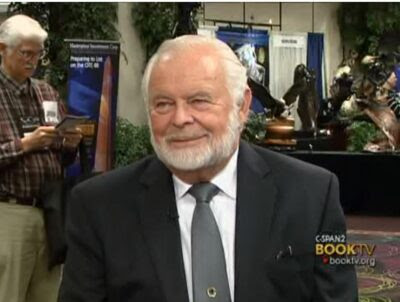
G EDWARD GRIFFIN

https://www.newsmaxtv.com/

https://tinyurl.com/38ku54a5
ORDER NOW! Get 50% Off with promo code ‘HALFOFF’


COME ON, DAD. IT’S TIME TO EAT

DISCLAIMER:
WE ARE NOT FINANCIAL ADVISORS AND DO NOT PROVIDE FINANCIAL ADVICE
The website, LeibovitVRNewsletters.com, is published by LeibovitVRNewsletters LLC.
In using LeibovitVRnewsletters.com (a/k/a LeibovitVRNewsletters LLC) you agree to these Terms & Conditions governing the use of the service. These Terms & Conditions are subject to change without notice. We are publishers and are not registered as a broker-dealer or investment adviser either with the U.S. Securities and Exchange Commission or with any state securities authority.
All stocks and ETFs discussed are HYPOTHETICAL and not actual trades whose actual execution may differ markedly from prices posted on the website and in emails. This may be due internet connectivity, quote delays, data entry errors and other market conditions. Hypothetical or simulated performance results have certain inherent limitations as to liquidity and execution among other variables. PAST RESULTS ARE NOT NECESSARILY INDICATIVE OF FUTURE FORECASTING ACCURACY OR PROFITABLE TRADING RESULTS.
All investments are subject to risk, which should be considered on an individual basis before making any investment decision. We are not responsible for errors and omissions. These publications are intended solely for information and educational purposes only and the content within is not to be construed, under any circumstances, as an offer to buy or to sell or a solicitation to buy or sell or trade in any commodities or securities named within.
All commentary is provided for educational purposes only. This material is based upon information we consider reliable. However, accuracy is not guaranteed. Subscribers should always do their own investigation before investing in any security. Furthermore, you cannot be assured that your will profit or that any losses can or will be limited. It is important to know that no guarantee of any kind is implied nor possible where projections of future conditions in the markets are attempted.
Stocks and ETFs may be held by principals of LeibovitVRNewsletters LLC whose personal investment decisions including entry and exit points may differ from guidelines posted.
LeibovitVRNewsletters.com cannot and do not assess, verify or guarantee the suitability or profitability of any particular investment. You bear responsibility for your own investment research and decisions and should seek the advice of a qualified securities professional before making any investment. As an express condition of using this service and anytime after ending the service, you agree not to hold LeibovitVRNewsletters.com or any employees liable for trading losses, lost profits or other damages resulting from your use of information on the Site in any form (Web-based, email-based, or downloadable software), and you agree to indemnify and hold LeibovitVRNewsletters.com and its employees harmless from and against any and all claims, losses, liabilities, costs, and expenses (including but not limited to attorneys’ fees) arising from your violation of this agreement. This paragraph is not intended to limit rights available to you or to us that may be available under the federal securities laws.
For rights, permissions, subscription and customer service, contact the publisher at mark.vrtrader@gmail.com or call at 928-282-1275 or mail to 10632 N. Scottsdale Road B-426, Scottsdale, AZ 85254.
The Leibovit Volume Reversal, Volume Reversal and Leibovit VR are registered trademarks.
© Copyright 2025. All rights reserved.